
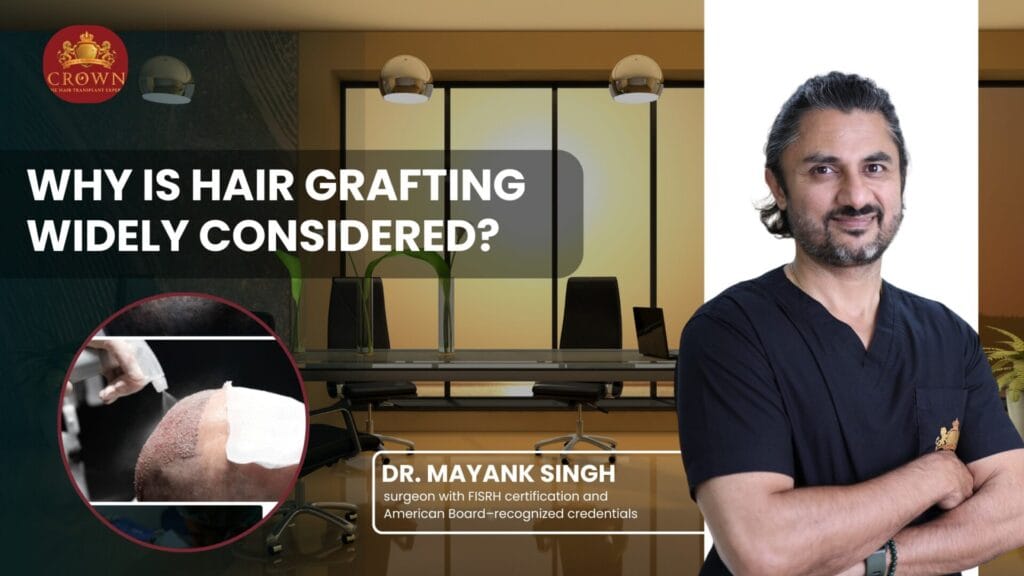
Hair grafting has emerged as one of the most trusted solutions for individuals seeking permanent hair restoration. With advancements in surgical precision and natural-looking outcomes, the procedure is increasingly chosen by people who want to restore both hair density and self-confidence.
According to Dr. Mayank Singh,
Hair grafting is a medically advanced technique that focuses on transplanting healthy follicles to thinning areas for long-term growth. When performed on suitable candidates, it delivers predictable, natural results while supporting overall scalp health.
What Makes Hair Grafting a Preferred Hair Restoration Method?
Hair grafting is widely considered because it offers permanent results while maintaining a natural appearance. The procedure is designed to replicate natural hair growth patterns, making it difficult to distinguish transplanted hair from existing strands.
- Natural-looking outcomes:
Modern grafting techniques ensure follicles are placed at the correct angle and direction. This helps the new hair blend seamlessly with surrounding strands, avoiding an artificial look. - Permanent solution:
Transplanted follicles are typically resistant to hair loss. Once they begin growing, they continue to grow naturally, reducing the need for repeated treatments. - Improved confidence:
Restoring hair density often enhances self-image. Many patients report feeling more confident in both professional and social environments. - Advanced surgical precision:
Today’s procedures use refined tools and planning methods that improve graft survival. This leads to consistent growth and fuller coverage over time.
To understand the long-term benefits of grafting, read our detailed guide on “What Results Can Hair Grafting Offer?”
Who Can Benefit the Most from Hair Grafting?
Hair grafting is ideal for individuals experiencing pattern baldness, thinning hair, or hairline recession. However, medical evaluation is essential to determine suitability.
- Individuals with sufficient donor hair:
Strong donor follicles allow surgeons to hair transplant an adequate number of grafts without compromising future restoration options. - People with stable hair loss:
Patients whose hair loss pattern has stabilized often achieve more predictable results, as surgeons can plan density strategically. - Those seeking natural density:
Hair grafting focuses on recreating fullness rather than temporary coverage, making it suitable for patients wanting realistic improvements.
Men and women alike:
The procedure is effective for both genders, particularly when thinning affects appearance and confidence.
Why Choose Dr. Mayank Singh for Hair Grafting?
Crown Hair Transplant, led by Hair Transplant Surgeon Dr. Mayank Singh, emphasizes medical accuracy, safety, and personalized care. The clinic evaluates donor quality, scalp condition, and long-term hair patterns before recommending grafting, ensuring every treatment plan is scientifically sound. With advanced technology and patient-focused protocols, the clinic strives to deliver natural density and long-lasting restoration for individuals seeking reliable results.
FAQs
Hair grafting is a core technique within hair transplant procedures where individual follicular units are moved to thinning areas.
Results are typically permanent because transplanted follicles are genetically resistant to hair loss.
Local anesthesia is used during the procedure, so patients usually feel minimal discomfort.
Initial growth usually begins within 3–4 months, with fuller results visible around 9–12 months.