
Female Hair Transplant in Delhi
Hair loss in women often begins quietly, without obvious signs. It shows up as a wider parting, softer edges at the temples, or a ponytail that no longer feels as full as it once did. By the time most women seek help, they’ve already spent months adjusting their routine around a change they couldn’t fully explain.
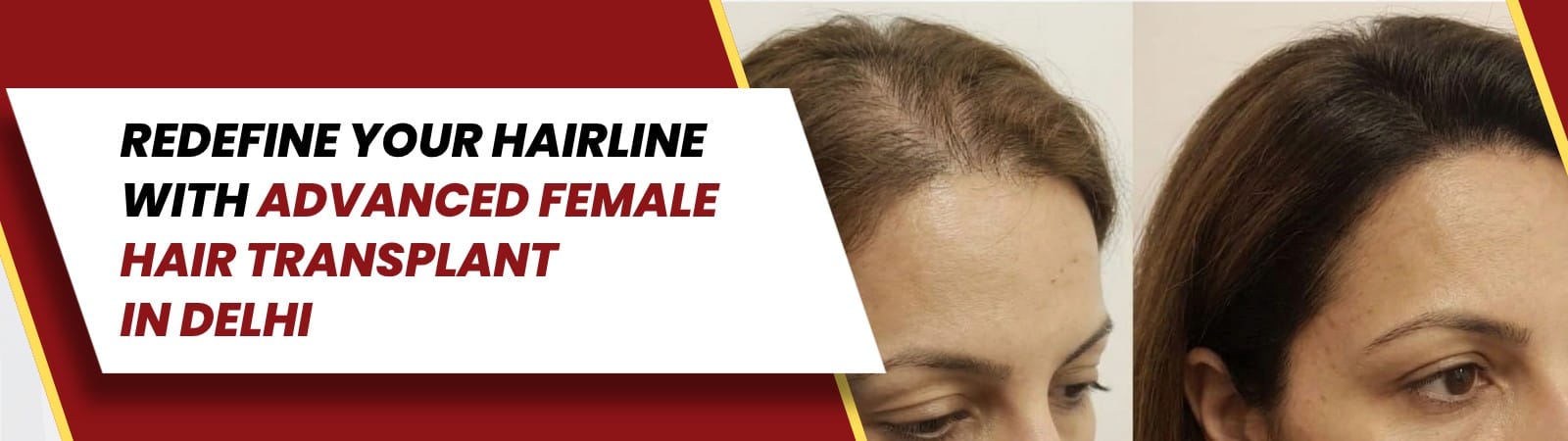
If you’re considering a female hair transplant in Delhi, Crown offers a long-term, natural solution by restoring your own hair in areas where density has reduced. The focus isn’t on dramatic transformation, but on bringing back the hair that feels like yours.
At Crown, every procedure is led personally by Dr. Mayank Singh, ensuring a level of surgical precision and consistency that directly impacts the final outcome. Located in Panchsheel Park, South Delhi, the clinic approaches female hair restoration with careful planning, clinical discipline, and no unnecessary shortcuts.
What is Female Hair Transplant?
Female hair transplant is a specialized procedure designed to restore hair density in women experiencing:
- Diffuse thinning
- Hairline recession
- Post-pregnancy or hormonal hair loss
- Traction alopecia (tight hairstyles)
- Patchy hair loss or scarring
Unlike male procedures, female hair transplants focus more on enhancing density than on aggressive hairline lowering, ensuring a soft, natural look.
At Crown, the primary technique used is FUE (Follicular Unit Extraction), in which individual follicles are carefully extracted and implanted with precision.
How Does Female Hair Transplant Work at Crown?
Step 1: Personalised Consultation
Dr. Mayank Singh conducts every consultation himself, using advanced trichoscopy to assess your scalp in detail. In women, this stage is critical. Hair loss can stem from multiple causes — hormonal, genetic, traction-related, or scarring — and the treatment depends entirely on identifying the correct one.
You’ll receive a clear assessment of your donor density, expected progression of hair loss, and whether surgery is the right step at this stage. If it isn’t, that will be communicated honestly.
Step 2: Pre-Procedure Preparation
Before the procedure, you’ll be guided through:
- Medications and supplements to pause
- Hair washing protocol with prescribed solutions
- Dietary instructions for the day of surgery
- Post-procedure transport and aftercare planning
Step 3: The Procedure Day
A female hair transplant in Delhi typically takes 4 to 8 hours, depending on the number of follicles required. Most cases range between 1,000 and 3,500 follicles.
Here’s how the procedure unfolds:
Anaesthesia
Extraction
Follicle Preparation
Recipient Site Creation
Implantation
Step 4: Post-Procedure Recovery
You’ll be given detailed aftercare instructions along with prescribed medications. Most patients return to routine activities within 5 to 7 days.
Shedding of transplanted hair between weeks 1 and 3 is expected and part of the normal growth cycle. New growth begins around months 3 to 4, with fuller results visible between 10 and 14 months.
Aftercare protocols at Crown align with established dermatological recovery standards.
Female Hair Transplant Cost in Delhi
Crown's Pricing Structure
At Crown, the procedure is priced at ₹150 per follicle, depending on:
- Total number of follicles required
- Complexity of the case (diffuse thinning, parting area, temples, or crown)
- Technique requirements (Long Hair FUE, repair cases, or combination approaches)
Typical Session Costs
Session Size | Estimated Cost |
Small (1,000 – 1,500 follicles) | ₹1,50,000 – ₹2,25,000 |
Medium (2,000 – 2,500 follicles) | ₹3,00,000 – ₹3,75,000 |
Larger (3,000 – 3,500 follicles) | ₹4,50,000 – ₹5,25,000 |
What Your Cost Covers
- Pre-operative consultation with Dr. Mayank Singh
- Advanced trichoscopy analysis
- Complete surgical procedure — all extractions and incisions performed by Dr. Mayank
- All medications and post-operative supplies
- Multiple follow-up consultations through year one
- Lifetime access to guidance and support
What Your Cost Covers
Crown offers flexible payment plans and EMI options through leading financial partners.
Every case is individual. The only accurate cost figure comes after Dr. Mayank has assessed your donor density and the degree of loss in person. What you’re quoted is what you pay — nothing added later.
Why Choose Female Hair Transplant at Crown?
Results That Look Natural on Women
Hairline design for women is not the same discipline as it is for men. Parting lines, temple framing, and density distribution all depend on facial structure, how you style your hair, and the specific pattern of your existing coverage. At Crown, the aesthetic planning for each case is done with that level of detail — not from a template.
Surgeon-Led Procedure
At many clinics, procedures are delegated to technicians. At Crown, your female hair transplant in Delhi is performed under the direct involvement of Dr. Mayank Singh, ensuring consistency and surgical accuracy at every stage.
Long Hair FUE — No Need to Shave
For women who want to maintain their appearance during recovery, Long Hair FUE allows the procedure without full shaving. Only small, concealed sections are trimmed, keeping your overall hair length intact.

Honest Candidacy Assessment
Not every case is suited for immediate surgery. If your hair loss is still evolving or linked to underlying causes, you’ll be advised accordingly. The focus is on timing the procedure right, not rushing into it.
Recognised Expertise
Dr. Mayank Singh’s credentials reflect global training and recognition:President, Association of Hair Restoration Surgeons India (AHRS) Diplomate, American Board of Hair Restoration Surgery (ABHRS) Fellow, International Society of Hair Restoration Surgery (FISHRS) Only Indian plastic surgeon to receive the Dr. Shelly Friedman AwardThese represent years of clinical training, academic publication, and peer recognition across the global hair restoration community — all directly relevant to the quality of your result.
Complete Post-Procedure Support
Your care at Crown doesn't end when you leave on procedure day. It includes:Free lifetime follow-up consultations Post-procedure support via phone and WhatsApp Medical management protocols to preserve existing native hair PRP and adjunct treatments, recommended only when clinically indicated
FAQ
Yes. FUE is a minimally invasive procedure with a well-established safety record. The essential factor is proper candidate selection. Women with active hormonal shedding or insufficient donor density may need to address those factors before surgery is appropriate.
No. With Long Hair FUE, only small sections of the donor area are trimmed. Your surrounding hair covers these sections naturally throughout recovery. Most women maintain their normal hairstyle from day one.
It depends on the area and extent of loss. A hairline refinement may need 800 to 1,500 follicles. Diffuse thinning across the crown or parting may require 2,000 to 3,500. Dr. Mayank uses trichoscopy during the consultation to assess donor density and provide you with an accurate estimate before any decision is made.
Transplanted hair sheds in weeks 1 to 3 — this is normal. New growth begins around months 3 to 4. By month 6, most patients see 50 to 60% of the final result. Full results are typically visible between 12 and 14 months post-procedure.
The most frequent causes include androgenetic alopecia (DHT sensitivity in the follicles), traction alopecia from years of tight hairstyles or extensions, post-illness or post-pregnancy shedding, scarring alopecias, and irregular hairlines from prior cosmetic procedures. Correct diagnosis is the first step at Crown — not every cause leads to the same treatment.
Crown prices the procedure at ₹150 per follicle. Your total cost depends on the number of follicles required and the complexity of your case. You’ll receive a clear, itemised estimate after your consultation with Dr. Mayank — no packages, no hidden additions.
Yes. Once transplanted follicles have established themselves — usually from month 6 onwards — the hair behaves exactly like your natural hair. It can be cut, coloured, heat-styled, and treated without any restriction.
A suitable candidate has stable hair loss, a donor area with sufficient density, and realistic expectations about outcomes. Active shedding phases, unmanaged medical conditions, or inadequate donor supply may mean surgery is deferred until the situation changes. Dr. Mayank assesses all of this honestly during consultation — before any commitment to proceed is made.
Disclaimer: The information shared in this content is for educational purposes and not for promotional use.