
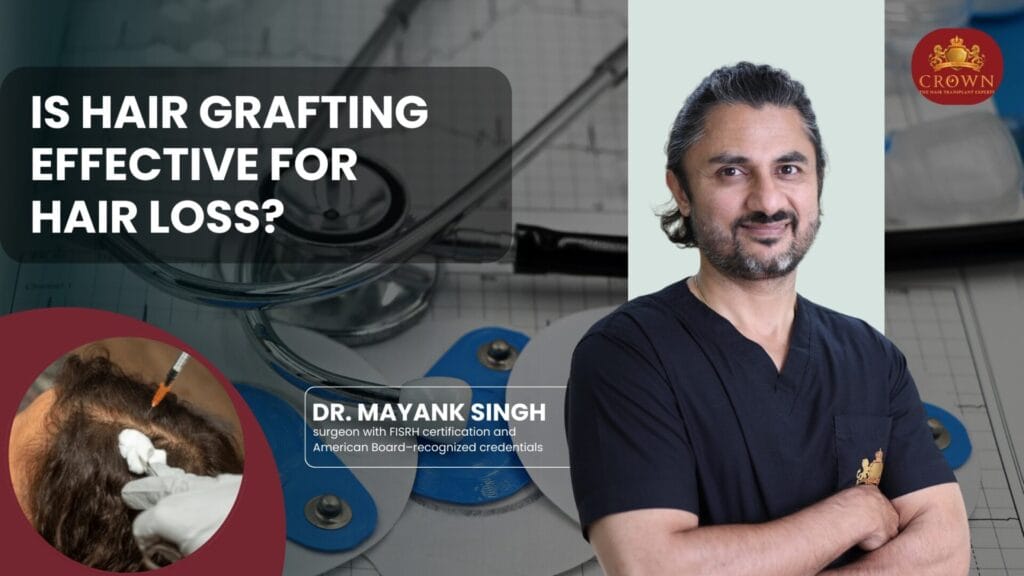
Hair grafting is widely recognized as a reliable solution for individuals experiencing moderate to advanced hair loss. The procedure involves carefully extracting healthy hair follicles from the donor area and implanting them into thinning or bald regions. Because the transplanted follicles are resistant to hair fall, the results are typically long-lasting and natural-looking.
According to Dr. Mayank Singh,
Hair grafting is effective when performed with precise planning and correct graft placement. He explains that natural density, proper angulation, and preservation of donor strength are critical factors that determine the success and longevity of the outcome.
What Makes Hair Grafting an Effective Hair Restoration Method?
Hair grafting continues to gain popularity due to its structured surgical approach and permanent results.
- Permanent hair restoration:
The transplanted follicles are taken from areas genetically resistant to hair loss. Once implanted, they continue to grow naturally in the recipient area for years. - Natural hairline design:
Strategic placement and angulation of grafts ensure that the restored hairline looks realistic and blends seamlessly with existing hair. - Improves overall density:
By redistributing healthy follicles, the procedure enhances hair coverage and creates a fuller appearance in thinning zones. - Customized graft planning:
The number of grafts and technique selection are tailored according to scalp condition, extent of baldness, and future hair loss pattern.
If you want to understand technique differences, read “Choosing Between FUE and FUT Made Simple”
Why Is Professional Guidance Important in Hair Grafting?
Hair grafting is a medical procedure that requires surgical expertise, aesthetic judgment, and long-term planning. Crown Hair Transplant follows a structured surgical protocol that includes scalp assessment, graft calculation, and strategic implantation design. Professional supervision reduces complications and enhances natural-looking density while preserving future treatment options.
- Accurate graft calculation:
Determining the correct number of grafts prevents both under-treatment and donor depletion. - Precision implantation technique:
Correct depth and direction of graft placement improve survival rate and natural growth pattern. - Post-procedure monitoring:
Follow-ups help track healing and ensure transplanted follicles grow properly. - Long-term hair strategy:
Hair grafting is planned considering potential future hair loss progression.
Why Choose Dr. Mayank Singh for Hair Grafting Treatment?
Crown Hair Transplant provides advanced hair grafting procedures under the supervision of Hair Transplant Surgeon Dr. Mayank Singh. Every patient undergoes detailed scalp analysis, donor strength evaluation, and personalized graft planning before surgery. Patients should consider consultation when thinning becomes noticeable or bald patches begin expanding. With refined surgical techniques, controlled extraction methods, and structured aftercare protocols, the clinic focuses on achieving natural density while maintaining patient comfort and long-term scalp health.
FAQs
Yes, transplanted follicles are typically permanent as they are resistant to genetic hair loss.
Initial growth may begin after a few months, with full results visible within 9–12 months.
The procedure is performed under local anesthesia to ensure minimal discomfort.
When performed correctly under expert supervision, graft survival rates are generally high.