
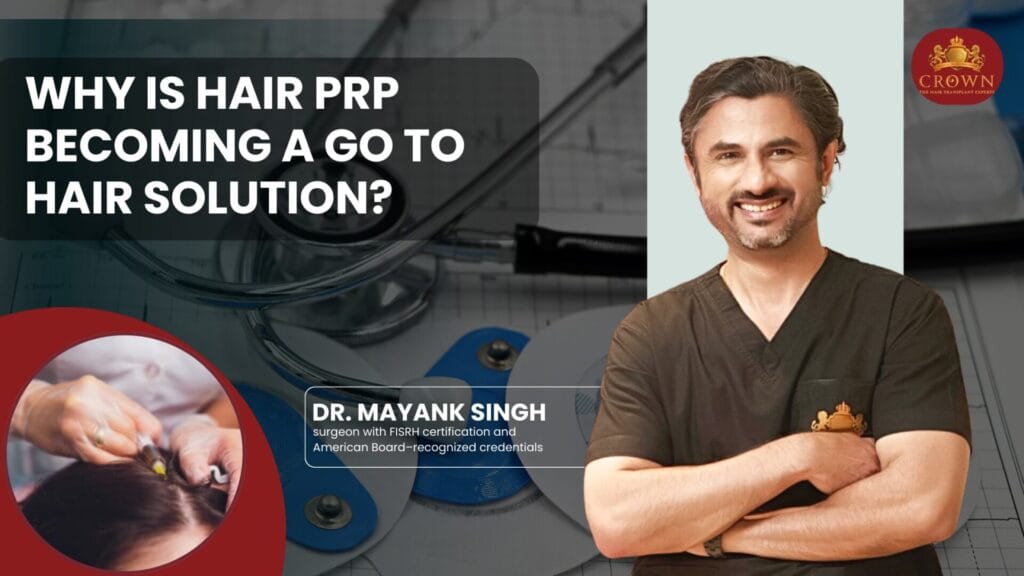
Hair PRP is gaining traction as a non-surgical hair loss treatment because it works through the body’s own biology rather than introducing synthetic material. Platelet-rich plasma extracted from the patient’s blood delivers concentrated growth factors directly to weakened follicles, stimulating activity in follicles that are still present but underperforming. The procedure is minimally invasive, requires no recovery period, and produces measurable outcomes in early to mid-stage hair thinning when the correct protocol is followed.
According to Dr. Mayank Singh, Hair PRP Treatment is gaining preference because it uses the patient’s own blood components in a medically guided process. “Its growing use is justified when proper scalp evaluation confirms follicle activity before treatment is recommended.”
What Makes Hair PRP a Preferred Non-Surgical Option?
Several clinical characteristics distinguish PRP from other non-surgical hair loss treatments and explain why specialists include it as part of structured treatment plans.
Uses the body’s own growth factors — PRP is prepared from the patient’s own blood. No synthetic substance enters the scalp. The concentrated platelets contain growth factors that activate follicle stem cells directly. At Crown Hair Transplant, platelet concentration and injection depth are calibrated individually before each session.
Non-surgical with no recovery period — The procedure involves no incisions, no stitches, and no downtime. Most patients return to daily activity the same day. This makes it a practical option for patients who need ongoing maintenance without disruption to work or routine.
Early thinning responds consistently — PRP produces its strongest outcomes when follicles are still active and the hair loss is at an early to mid-stage. Follicles that are miniaturising but not yet permanently inactive respond to the growth factor stimulus, producing thicker and more consistent hair over the treatment course.
Complements surgical restoration — FUE Hair Transplant patients who use PRP post-procedure show improved graft survival and faster visible growth. PRP used alongside Microneedling also produces stronger outcomes than either treatment used independently.
For a detailed clinical breakdown of what PRP does and does not achieve, read our previous blog — Can Hair PRP Strengthen Existing Hair?
Is Hair PRP the Right Option for Every Hair Loss Case?
PRP is not appropriate for all hair loss presentations. Clinical suitability determines whether it is the right intervention or whether surgical options are more appropriate.
Early to moderate thinning with active follicles — Patients who still have visible hair in thinning zones with active follicles beneath get consistent clinical response. The more follicles remain active, the stronger the outcome from a completed PRP course.
Post-transplant scalp support — PRP used after Hair Grafting procedures supports graft survival and improves the biological environment for transplanted follicles to establish. It is one of the most evidence-supported post-surgical supportive applications of PRP.
Advanced baldness requires a different approach — Where follicles have permanently ceased functioning across significant scalp areas, PRP does not produce regrowth. Surgical restoration through FUE or FUT addresses those cases. PRP used on permanently inactive scalp produces no measurable result.
Session protocol determines outcome — Three to four initial sessions spaced four weeks apart are required before clinically meaningful improvement appears. Patients who complete only one or two sessions and assess the outcome are not evaluating a completed treatment course.
Why Choose Dr. Mayank Singh for Hair PRP Treatment?
Dr. Mayank Singh is the President of the Association of Hair Restoration Surgeons of India, a Diplomate of the American Board of Hair Restoration Surgery, and a Fellow of the International Society of Hair Restoration Surgeons. He is the only surgeon in India to have received the Shelly Friedman Award. For Hair PRP Treatment specifically, every case begins with a detailed scalp analysis and medical history review before a single session is scheduled. Platelet preparation, injection depth, session spacing, and post-treatment protocol are all determined by the individual patient’s scalp condition and follicle status. PRP is recommended based on clinical suitability, not on patient request alone.
📞 Call Now:.+91-9015112233
Book your Treatment consultation at Crown Hair Transplant today. Same-day appointments available for urgent cases.
FAQs
Typically 3–4 initial sessions followed by maintenance.
Improvement may begin after a few months.
Mild discomfort can occur but is generally manageable.
Maintenance sessions may be required for sustained results.