
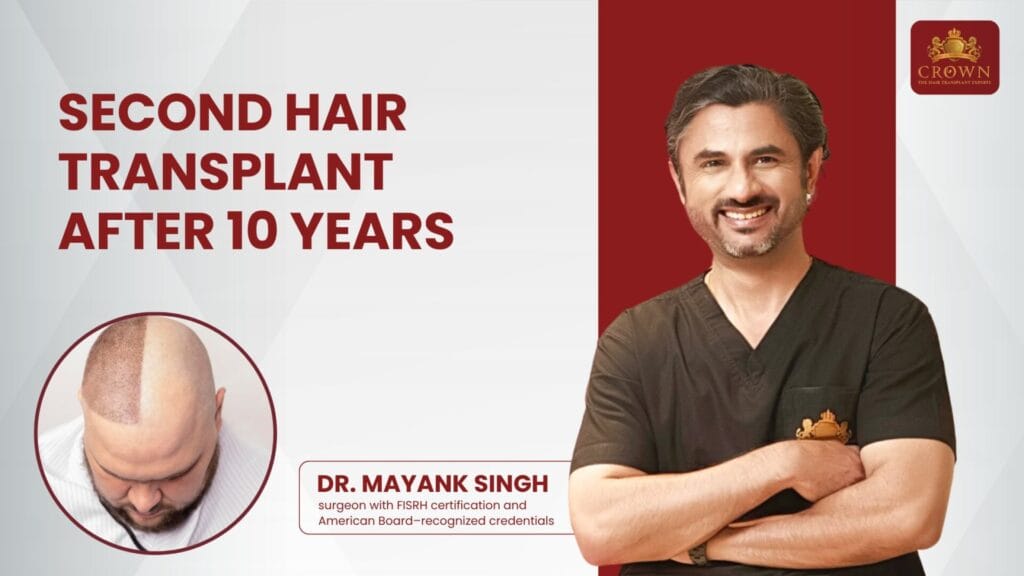
A second hair transplant after ten years is not uncommon. Hair loss is a progressive biological condition and a single procedure addresses only the loss present at the time of surgery. As surrounding native hair continues thinning the original result may require supplementation to maintain a natural and balanced appearance. Whether a second procedure is genuinely necessary depends on specific clinical factors requiring individual assessment.
According to Dr. Mayank Singh, FUT hair transplant outcomes remain permanent in transplanted areas but surrounding native hair loss continues independently after surgery. He explains that the need for a second procedure is determined by the extent of new loss, remaining donor availability, and whether the current result has become visually imbalanced.
What Clinical Factors Determine the Need for a Second Procedure?
Several specific indicators help establish whether a second hair transplant is clinically justified after a ten-year interval.
- Progression of Native Hair Loss: Significant thinning in areas surrounding the original restoration creates visible contrast with transplanted hair. This imbalance is the most common clinical reason patients return for assessment after a decade.
- Density Reduction in Previously Treated Areas: Some patients experience gradual density reduction due to ongoing miniaturisation of native hair within or adjacent to the treated zone. Trichoscopic assessment determines whether additional grafts would meaningfully address this concern.
- Remaining Donor Reserve Determines Feasibility: Ten years of progression may have affected donor zone density in some patients. A detailed Hair Transplant Surgeon in Delhi level evaluation of remaining donor supply is required before any second procedure is planned.
- Age and Ongoing Loss Trajectory Must Be Assessed: A patient at 45 presenting ten years after their first procedure carries a different progression risk than one at 60. Future hair loss trajectory relative to current age directly affects how a second procedure should be planned.
- Aesthetic Imbalance Justifies Clinical Intervention: When the frontal hairline remains restored but the mid-scalp or crown has continued thinning the overall aesthetic balance is disrupted. Restoring that balance through targeted supplementation is a clinically appropriate objective.
What Should Patients Evaluate Before Committing to a Second Procedure?
Proceeding with a second procedure requires the same rigorous evaluation applied to the first. Several factors carry direct clinical significance.
- Realistic Outcome Expectations Must Be Reestablished: A second procedure is supplementary not transformative. Donor supply after ten years may be more limited and achievable density targets must be discussed honestly before any commitment is made.
- Donor Zone Integrity Must Be Confirmed Trichoscopically: Prior extraction leaves residual impact on donor zone density. Trichoscopic assessment confirms how much viable donor hair remains and whether extraction quality supports meaningful additional coverage.
- Scalp Condition in Recipient Area Requires Assessment: Ten years of ageing and prior graft placement affect how the scalp receives new grafts. Recipient area assessment ensures additional implantation is clinically safe and likely to produce satisfactory survival rates.
- Medical Management Should Be Reviewed and Updated: Patients not currently on medical hair loss management should have this reassessed before a second procedure. Stabilising ongoing progression before surgery improves long-term outcome sustainability.
- Clinical Readiness Confirms Timing Not Time Elapsed Alone: A ten-year interval is generally sufficient for donor recovery and result assessment. However readiness for a second procedure is confirmed through clinical evaluation rather than time alone.
To understand the clinical factors that determine second procedure candidacy read our previous blog “Hair Loss Stabilization Before Transplant.”
Why Choose Dr. Mayank Singh for Hair Transplant in Delhi?
Dr. Mayank Singh is a Diplomate of the American Board of Hair Restoration Surgery, Fellow of the International Society of Hair Restoration Surgery, and President of the Association of Hair Restoration Surgeons of India. Every patient presenting for second procedure assessment at Crown Hair Transplant receives a thorough evaluation of donor reserve, recipient area condition, and hair loss progression before any recommendation is made. Clinical decisions are based entirely on individual assessment rather than assumptions about prior procedure outcomes.
Call Now: +91-9015112233. Book your consultation at Crown Hair Transplant today. Same-day appointments available for urgent cases.
FAQs
1. Is a second hair transplant always necessary after ten years?
Not always. It depends on the extent of new hair loss and whether the original result remains visually balanced.
2. How is donor availability assessed before a second procedure?
A trichoscopic evaluation of the donor zone confirms remaining graft viability and extraction feasibility.
3. Does a second hair transplant deliver the same results as the first?
Results depend on remaining donor supply and recipient area condition at the time of the second procedure.
4. What is the most important factor in deciding whether to proceed with a second transplant?
Remaining donor density and the degree of aesthetic imbalance caused by new hair loss are the primary determinants.