
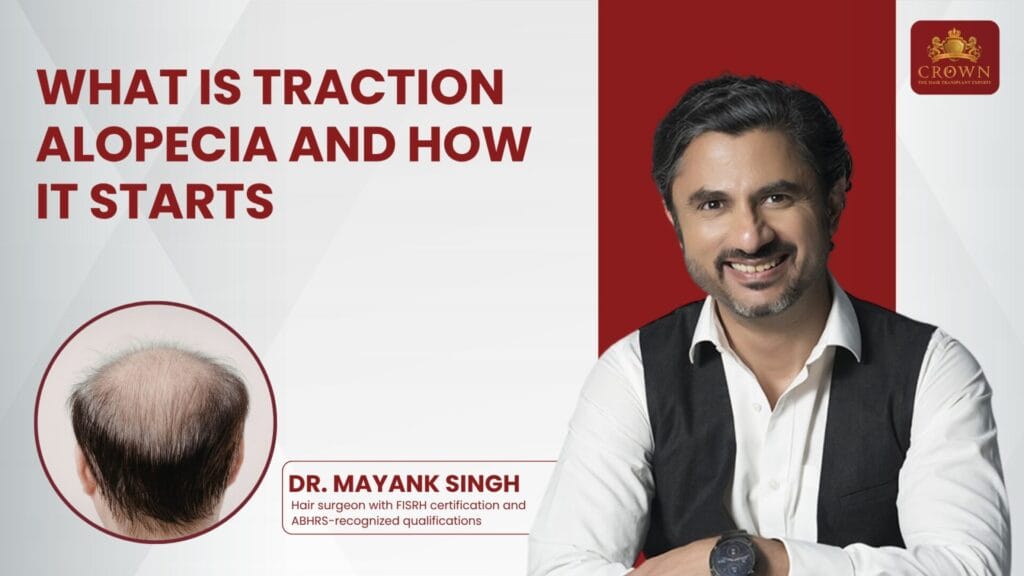
Traction alopecia is hair loss from repeated pulling at the roots, and it’s almost always styling-driven, think tight buns, cornrows, sleek ponytails, extensions worn daily. It starts quietly along the hairline and temples as fine short regrowth or small bumps most people brush off, until the thinning gets obvious and by then the window to reverse it is mostly gone.
According to Dr. Mayank Singh, an experienced hair transplant surgeon in Delhi, “Traction alopecia is one of the few hair loss types that’s fully preventable if caught early, yet most patients walk in after the follicles have already scarred shut.”
What causes traction alopecia in the first place?
It doesn’t happen overnight, the condition builds over months and years of steady mechanical stress on the same few follicles.
- Tight styling: Sleek buns, high ponytails and daily braids tug the same follicles in the same direction, weakening root anchoring over time.
- Extensions and weaves: Heavy sew-ins and glue-based attachments load the frontal hairline with weight the follicles were simply never built to carry, which is why edges go first.
- Chemical load: Relaxers, perms, repeated colouring already thin the shaft, and once that compromised hair gets pulled back tightly the follicle takes a double hit no scalp recovers from cleanly.
- Headwear pressure: Turbans, tight hijabs worn without a soft underlayer and rigid hairpieces create steady pressure on specific zones, and thinning usually mirrors the exact shape of whatever’s being worn.
If the frontal edges have already pulled back visibly, booking a hairline restoration consultation gives you a straight answer on whether surgery is still viable or whether scarring has already closed that door.
How does traction alopecia actually start and progress?
The earliest signs are subtle, and most people only notice the problem after the first visible patch appears, by which point the damage has a head start.
- Bumps and irritation: First sign is usually small red bumps or pustules around pulled follicles, the scalp flagging that tension is already inflaming the root before any shedding shows up.
- Shorter baby hairs: Wispy short regrowth along the hairline is often the second clue, where follicles are still cycling but producing thinner weaker hair each time because the stress phase is cutting growth short.
- Visible recession: Months in, the hairline itself starts shifting back, temples usually first, and by now the follicles in the worst zones have stopped producing terminal hair at all.
- Scarring lock-in: Keep the tension going long enough and the follicle scars over permanently, that zone won’t grow hair again no matter what you try, which is when surgery becomes the only real option left.
For readers whose thinning is spreading beyond the hairline, our blog on diffuse thinning hair and transplant options covers how scattered cases get assessed before anyone draws up a surgical plan.
Why Choose Crown Hair Transplant
Dr. Mayank Singh brings over 15 years in hair restoration with 10,000+ procedures behind him and serves as President of the Association of Hair Restoration Surgeons of India, and that depth shows up in how traction alopecia cases get staged, timed and planned based on whether the follicles are still alive or already scarred. What patients consistently mention is the honesty of the pre-surgery assessment, early-stage cases often get advised non-surgical management first instead of being rushed into theatre, and only confirmed scarring zones actually get surgical correction.
 Call Now: +91-9015112233
Book a consultation with Dr. Mayank Singh at Crown Hair Transplant in Delhi for expert, personalised hair restoration guidance.
FAQs
Yes, if caught early before scarring sets in, stopping the tension usually brings full regrowth within 3 to 6 months.
Smooth shiny skin with no follicle openings under trichoscopy means scarring has already happened and loss is permanent.
Yes, women face it far more often because of tight buns, extensions, braids and decades of repeated mechanical styling pressure.
Yes, but only after the scalp has been tension-free for 6 to 12 months and scarring is clearly established.
Reference link
- Traction Alopecia Clinical Review — US National Library of Medicine
- Hair Loss from Tight Hairstyles — American Academy of Dermatology