
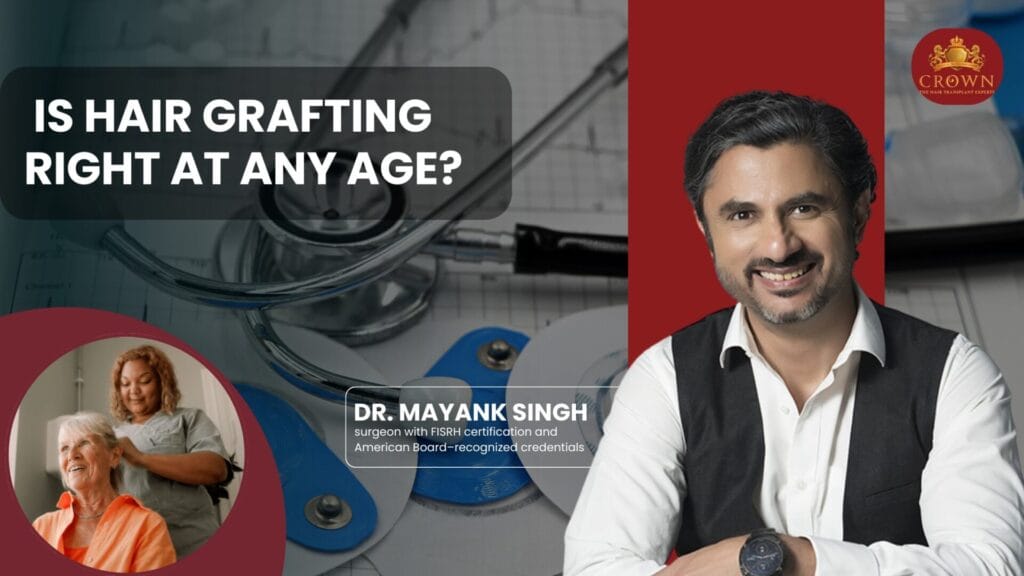
Hair loss can affect individuals at different stages of life, leading many to wonder whether hair grafting is suitable regardless of age. While the procedure is highly effective for restoring hair, medical suitability matters more than the number of years. Factors such as hair loss stability, donor availability, and long-term expectations play a crucial role in determining the right timing.
According to Dr. Mayank Singh,
Hair grafting is not defined by age alone but by clinical readiness. Patients with stable hair loss patterns and adequate donor hair often achieve more predictable and natural-looking outcomes compared to those who undergo treatment too early.
How Does Microneedling Improve Skin Smoothness?
Age can impact surgical planning, but it is not always a limitation. What matters most is whether the scalp and hair loss pattern support long-term restoration.
- Hair loss stability:
Younger patients may still experience progressive hair thinning. Waiting until the pattern becomes more predictable helps surgeons design a hairline that remains natural over time. - Donor hair maturity:
Strong and well-established donor follicles improve graft survival. Mature donor areas provide the foundation for lasting density. - Realistic expectations:
Patients who understand the gradual nature of hair growth tend to feel more satisfied with the outcome. Proper counseling ensures clarity before surgery. - Preventive planning:
Surgeons often consider future hair loss while creating the transplant strategy to avoid uneven density later.
For more insight into outcomes, read our blog “What Results Can Hair Grafting Offer?”
Is There a Best Age to Consider Hair Grafting?
At crown hair transplant Rather than focusing on a specific age, specialists evaluate readiness based on medical indicators and long-term hair goals.
- Mid-to-late 20s and beyond:
Many surgeons prefer treating patients once hair loss patterns become clearer, allowing for strategic planning. - Older patients with stable loss:
Individuals experiencing consistent thinning often achieve excellent coverage and density. - Customized surgical timing:
Personalized assessment helps determine whether immediate treatment or a delayed approach is more beneficial. - Balanced aesthetic design:
Age-appropriate hairlines prevent unnatural appearances as facial features evolve.
Why Choose Dr. Mayank Singh for Hair Grafting Guidance?
Crown Hair Transplant provides medically guided hair restoration supported by advanced technology and individualized treatment strategies. Hair Transplant Surgeon Dr. Mayank Singh carefully evaluates scalp health, donor strength, and future hair loss progression before recommending hair grafting. Patients should consider visiting the clinic when hair thinning becomes noticeable, confidence is affected, or non-surgical treatments fail to provide improvement. With a focus on precision, safety, and natural density, the clinic offers a trusted path toward long-term hair restoration.
FAQs
There is no strict minimum age, but surgeons usually recommend waiting until hair loss stabilizes.
Yes, provided they have adequate donor hair and good scalp health.
Transplanted follicles are typically resistant to hair loss, supporting long-lasting results.
Healing varies by individual health rather than age alone.