
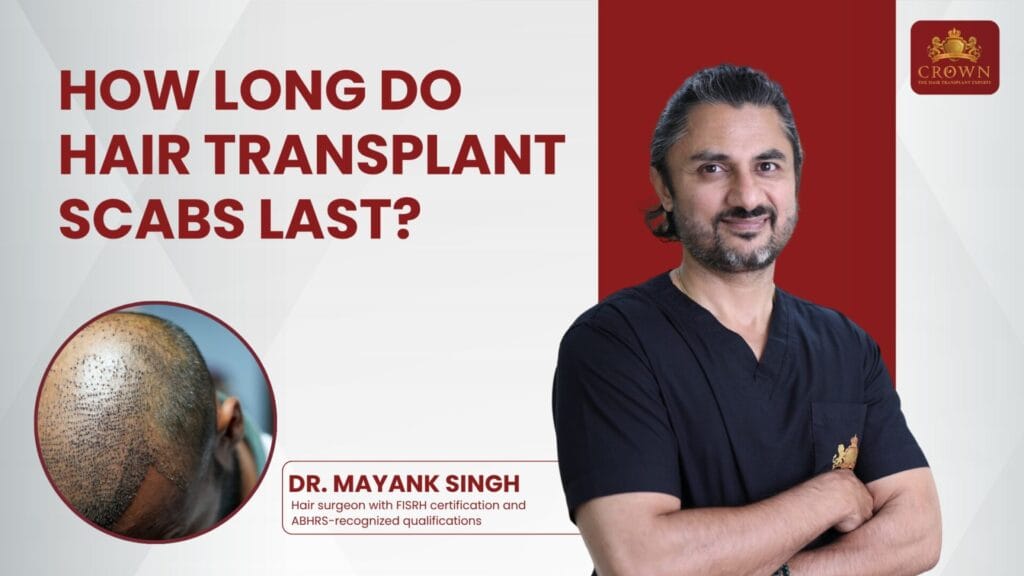
Hair transplant scabs typically last for 7 to 14 days after the procedure, with most falling off naturally by the end of the second week as part of the healing process. Proper, gentle washing and moisturizing, starting around day 3-5, are crucial to softening and removing these crusts without damaging the new grafts.
According to Dr. Mayank Singh a renowned Hair Transplant Surgeon, “scabs form as a natural protective response around each implanted graft site and their gradual removal through correct washing technique is one of the most important steps patients can take to support healthy follicle survival during early recovery.”
What Causes Scabs and Why Does Their Removal Matter?
Understanding what scabs actually are and why removing them correctly matters helps patients approach this phase with far more confidence and far less anxiety than most experience going into it.
- Scabs Form as a Biological Protection Response: Each scab develops around an individual graft site where the scalp is healing from the implantation process, and this crusty layer protects the follicle underneath while tissue integration begins during the earliest days of recovery.
- Picking Scabs Is the Most Common and Damaging Mistake: Manually removing scabs before they are ready pulls the graft out along with the crust in many cases, and the damage this causes to follicle survival rates is one of the most avoidable reasons for poor density outcomes after an otherwise well-executed procedure.
- Correct Washing Technique Loosens Scabs Safely: Gently patting diluted shampoo onto the scalp and allowing water to soften the crusts gradually is the approach most surgeons recommend, as this loosens scabs without applying the direct mechanical force that risks disturbing the grafts underneath.
- Scab-Free Scalp Does Not Mean Fully Healed Scalp: The visible clearing of scabs by day 14 reflects surface healing rather than complete follicle integration, and patients who assume they are fully recovered at this stage and resume unrestricted activity are still taking risks with graft stability that are genuinely worth avoiding.
Patients looking for a comprehensive overview of what each stage of recovery involves can find detailed guidance on hair grafting before their procedure date so they know exactly what to expect throughout the healing process.
What Factors Affect How Quickly Scabs Fall Off?
The timeline for scab removal varies between patients and several clinical and behavioural factors influence how quickly the process completes naturally and safely.
- Graft Density Affects Scabbing Duration in Specific Zones: Areas where grafts were placed more densely tend to retain scabbing slightly longer than lower density zones because the overlapping crust across multiple adjacent sites takes additional time to soften and separate without mechanical interference.
- Washing Frequency and Technique Directly Influence the Timeline: Patients who follow their post-operative washing protocol correctly and consistently typically clear scabs faster than those who wash too infrequently or apply too much direct pressure during the cleaning process.
- Individual Skin Type and Healing Rate Play a Role: Patients with oilier scalps tend to see faster scab softening while those with drier skin types may experience slightly more stubborn crusting that takes a few additional days to clear fully even with correct washing technique applied throughout.
- Humidity and Climate Affect Surface Healing Speed: Patients recovering in more humid environments often find scabs soften faster than those in dry climates, and staying adequately hydrated during the recovery period supports skin moisture levels that contribute to more comfortable and timely scab removal.
Patients who want to understand the clinical and practical considerations involved in high volume procedures should read our blog on mega session hair transplant before finalising their surgical plan.
Why Choose Dr. Mayank Singh for Hair Transplant in Delhi?
Dr. Mayank Singh is a Diplomate of the American Board of Hair Restoration Surgery, a Fellow of the International Society of Hair Restoration Surgery, and the President of the Association of Hair Restoration Surgeons of India. At Crown Hair Transplant, a trusted destination for hair transplant in Delhi, he is known for combining advanced surgical expertise with a patient-focused approach. Every patient receives detailed post-operative care guidance, a structured follow-up schedule, and direct access to clinical support throughout the recovery period. This ensures that recovery outcomes consistently reflect the precision of surgical planning and the strength of the post-operative protocols followed in each individual case.
Book a consultation with Dr. Mayank Singh at Crown Hair Transplant in Delhi for expert, personalised hair restoration guidance.
FAQs
Some residual crusting in denser graft areas can persist slightly beyond two weeks and is considered within the normal healing range.
Following the recommended washing protocol consistently is the most effective way to support natural and timely scab removal safely.
Incorrect or premature removal of scabs can dislodge grafts, which is why following the surgeon’s washing instructions precisely is essential.
Most surgeons recommend gentle washing from day three or four onward with full normal washing usually permitted from week two depending on healing progress.