
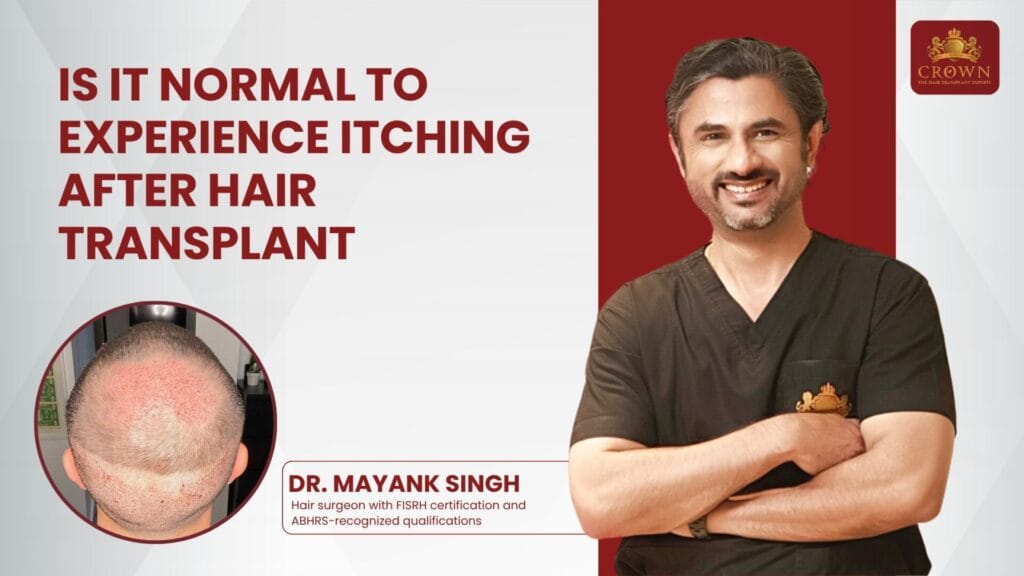
Yes, itching after a hair transplant is completely normal and happens because nerve endings around graft sites regenerate during healing. It typically occurs between days 3 and 14, peaking during the scabbing phase before gradually easing. Scratching during this window can dislodge unanchored grafts permanently.
According to Dr. Mayank Singh a renowned Hair Transplant Surgeon, “Itching is a positive sign of biological healing activity at the graft sites, but how patients manage that sensation in the first two weeks has a direct and measurable impact on their final density outcomes.”
Why Does Itching Happen After a Hair Transplant?
Here is something worth knowing before surgery so it does not catch you off guard during recovery, the itch that shows up around day three or four is not a warning sign, it is actually your scalp doing exactly what it should be doing at that stage
- Nerve Regeneration Triggers Itching Sensations: Nerve endings around each graft site start regenerating as healing progresses and the brain reads those signals as an itch.
- Scab Formation Creates Surface Tightness: Crusting around implanted follicles in the first week makes the scalp feel dry and tight which adds noticeably to the itching experience.
- Histamine Release Drives the Sensation: Your body releases histamine as part of its inflammatory response to surgery and histamine is one of the main reasons the itching can feel quite intense early on.
- Dry Scalp Makes Everything Worse: Washing restrictions in the first few days leave the scalp drier than normal which compounds the irritation coming from the healing process underneath.
Patients looking to support scalp health and bring inflammation down during recovery will find that Hair PRP treatment is commonly used alongside post-operative care to help the healing process along.
How Should You Handle the Itch Without Damaging Your Grafts?
Around day five or six the itching gets genuinely uncomfortable for a lot of people and that is precisely when the temptation to scratch becomes hardest to resist.
- Gentle Patting Is Your Only Safe Option: Lightly patting the scalp with clean fingertips gives brief relief without the mechanical force that scratching applies directly over graft sites.
- Antihistamines Work Far Better Than Willpower: Surgeons prescribe antihistamines in the first week for exactly this reason and taking them consistently controls the histamine-driven itch better than anything else available during recovery.
- Saline Spray Gives Instant Cooling Relief: A gentle mist of saline over the scalp cools the surface and reduces itching intensity immediately without any contact with the grafts underneath at all.
- Consistent Washing Progressively Reduces the Itch: Following the gentle washing protocol from day three or four softens scabs and reduces scalp dryness which are two of the biggest drivers of itching intensity during this phase.
Patients planning further restoration after seeing their final result should understand the clinical considerations involved in a second hair transplant before committing to additional sessions
Why Choose Dr. Mayank Singh for Hair Transplant in Delhi?
Dr. Mayank Singh is a Diplomate of the American Board of Hair Restoration Surgery, a Fellow of the International Society of Hair Restoration Surgery, and the President of the Association of Hair Restoration Surgeons of India. At Crown Hair Transplant, a trusted destination for hair transplant in Delhi, he is known for combining advanced surgical expertise with a patient-focused approach. Every patient receives detailed post-operative care guidance, a structured follow-up schedule, and direct access to clinical support throughout the recovery period. This ensures that recovery outcomes consistently reflect the precision of surgical planning and the strength of the post-operative protocols followed in each individual case.
Book a consultation with Dr. Mayank Singh at Crown Hair Transplant in Delhi for expert, personalised hair restoration guidance.
FAQs
Itching usually occurs between days 3 and 14 with intensity reducing as scabs fall off naturally.
No, scratching risks dislodging unanchored grafts and permanently compromising final density outcomes.
Yes, antihistamines are commonly prescribed after surgery specifically to reduce histamine-driven itching.
No, itching is a normal and expected sign of biological healing activity at graft sites during early recovery.